

The park is the arena
A co-located augmented-reality shooter for iPhone. You and the other players stand in the same field, see each other through the camera, and shoot at real distance.
In development · not released
The other players are actually there
Most AR shooters put something imaginary in your living room. This one puts nothing imaginary anywhere. The opponent behind the tree is a person behind a tree; the sixty metres between you is sixty metres of grass. The phone is the weapon and the camera is the sight.
What that buys is the thing a screen cannot fake: cover that works because it is cover, distance that costs you because you have to walk it, and a flank that is a decision about real ground. What it costs is that the game only exists outdoors, in daylight, with other people who came to play it.
Four phases, and the server runs all of them
- The host draws the arena On a map, by hand. Not chosen from a list of venues — a play area is a shape somebody drew around the part of the park they are allowed to use.
- Everybody gathers and readies The lobby shows who has joined, which side they are on and who is ready. The round does not start until the host starts it.
- Walk to your start point A timed window to spread out and reach a start position, so a round never opens with eight people standing on the same patch of grass.
- The round runs Ten minutes by default. Every shot, every hit and every score is decided by the server.
Four rule sets
A mode is a server-side rule set, never a client toggle — a mode the client enforces is a mode a modified client opts out of.
Team deathmatch
Two fixed sides, filled evenly by the server. You respawn where you fell after eight seconds, with three seconds of protection that ends the moment you fire.
Domination
Two fixed sides, as above.
Its objective rules are not built. The mode is named, selectable and plays exactly as team deathmatch today. It is listed here because it is in the game, not because it is finished.
Free for all
Everyone is their own side. Same respawn rules; no teammates to account for.
Battle royale
Squads of one to four, and death is the end of your round — the single difference that makes it a different game rather than a different scoreboard.
The map closes, weapons are found on the ground, and players outside your squad are not sent to your phone at all until they fire.
A shape somebody drew, with a rule around the edge
The boundary is a safety rule wearing a game rule's clothes. Cross it and you get a warning band first, then five seconds to come back — not a wall, and not an instant penalty, because the ground is real and a player reading a countdown is a player not watching for a road.
Start points are always inside the play area, so the walk to one never crosses the edge that exists to keep people out of traffic. The tolerance for standing on your point is generous and derived from your own phone's reported accuracy — being twenty metres off according to a receiver you cannot see or fix is not a thing to be punished for.
In battle royale the arena also closes. Three rings, each shown on the map before it arrives, each one hurting more than the last while you are outside it.
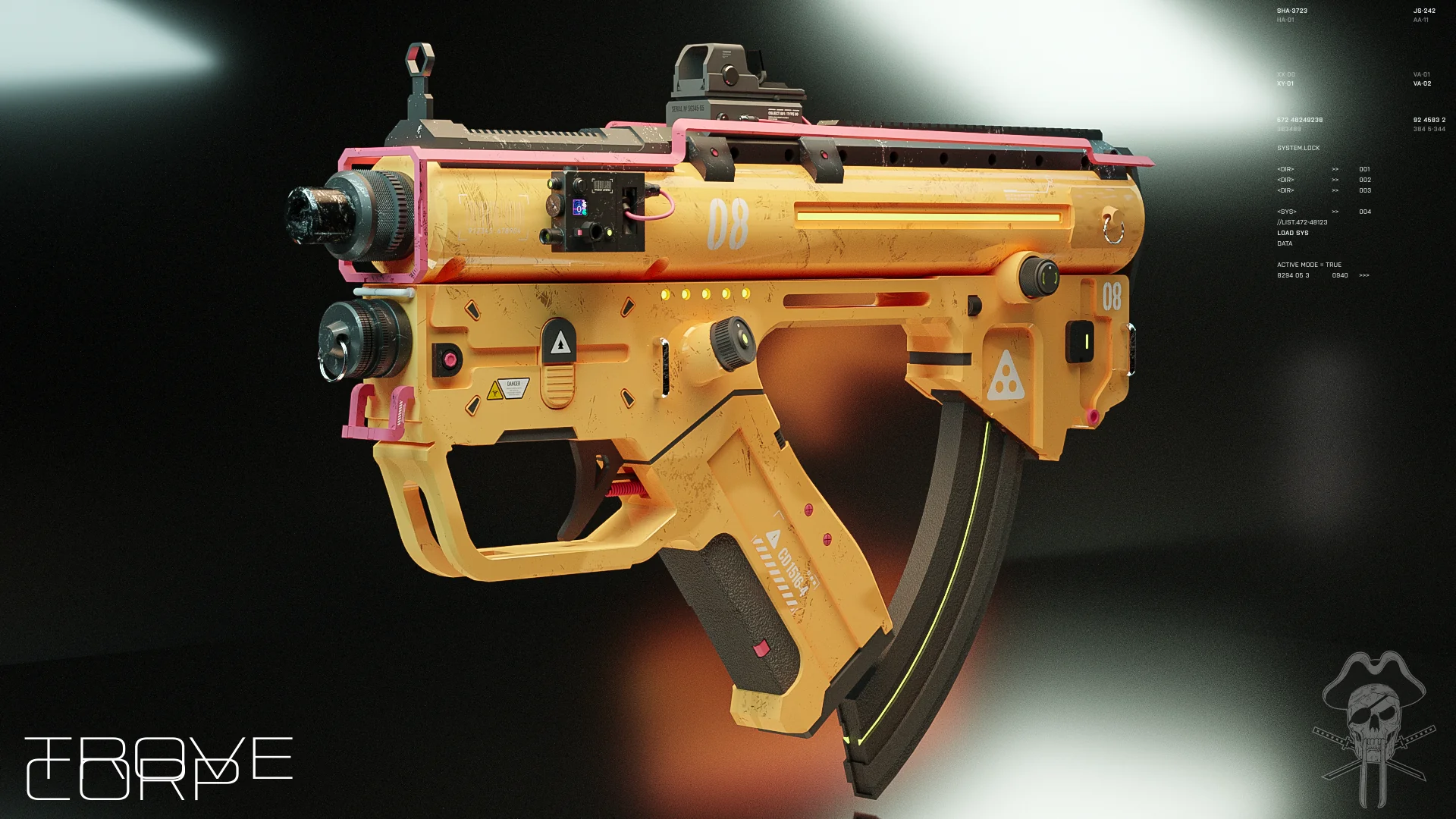
Six weapons
Everyone starts with the ISSUE. The other five are found on the ground, and only in battle royale — in the other modes you carry what you started with.
SR-1 Issue
The starting rifle. Nobody finds one, because everybody already has one.
RK-7 Pulse
Light ammunition.
Wasp-9
Light ammunition.
V12 Sidearm
Shells.
Mule
Heavy ammunition.
Longview
Heavy ammunition. The marksman's answer to the fact that this game is played at sixty metres.
A modified client cannot decide it hit you
Most games bury this. Here it is worth saying plainly, because it is the whole architecture: your phone claims a hit, and the server decides whether it happened, using the positions it already holds for everybody. A rejected claim is a verdict on a shot, never a ban on a player.
- The boundary — a warning band, then five seconds to return. Audible and felt, not just drawn, because a phone in your hand is not a phone you are looking at.
- Spawn protection — three seconds after you respawn, and it breaks the instant you fire. It is there to stop you being shot while the camera settles, not to buy you a free first shot.
- Firing gives you away — for two seconds after a shot, in battle royale, your position goes to everyone. Long enough to be pushed on, short enough that one shot is not a sentence.
- Positions are filtered on the wire — not in the renderer. Sending every position and asking the app to hide most of them is a wallhack with a polite client.
What the game knows about you
Before a session, the game takes reference photographs of the players so that it can tell you apart on a field. That is biometric data, and it is treated as such.
- It is opt-in, per session. Taken at the venue, for that game, and deleted when the session ends.
- It never leaves your phone. The reference gallery is not uploaded, not backed up and not shared between players.
- Your face is consented to separately from the rest of the capture.
- The impact assessment comes first. The formal data protection assessment is a prerequisite for the first field session, not paperwork that catches up afterwards.
A recent iPhone, daylight, and other people
- iPhone 13 Pro or newer. A floor, not a recommendation: the game needs the depth sensor, the neural engine and the telephoto lens to tell a person at sixty metres from a person at thirty.
- Outdoors, in daylight. There is no indoor mode and no night mode.
- Somewhere you are allowed to play. The host draws the boundary, and it is their job to draw it somewhere legal and safe.
- Other people. It is co-located multiplayer. On your own there is a practice range and nothing else.
iPad runs the operator's side — enrolment and match control — rather than play. Wi-Fi iPads have no satellite positioning and no iPad has a telephoto.
The obvious ones
Can I play it?
Not yet. There is no release, no date and no waiting list. When there is something to announce it will be announced here first.
Do I have to wear or print anything?
No. Printed markers were ruled out early — a tag big enough to read at twenty-five metres is useless at sixty, which is the range this game is designed around. Identity comes from the enrolment photographs, and optionally from a beacon or a coloured bib that buys you range rather than being a condition of playing.
Can I play indoors, or at night?
No. The game is built on seeing real people at real distance in real light.
What data do you keep?
The reference photographs stay on your phone and are deleted at the end of the session. During development, sessions are recorded for measurement — that is described in full on the privacy page.
Is any of this actually built?
Some of it. The server, the match rules, the modes and the arena described above are real and run today. The perception work — the part that recognises who it is looking at — is being measured before it is built. The build log says exactly where each piece stands, including the parts that could still stop the project.